
Butter vs. Margarine — Which Is Actually Better for You?
by Cary and Patty ~ My Simply Sage
Watching a video the other day and the question came up, why the fat in that recipe and what kind is it? I did some research and this is what I came up with.
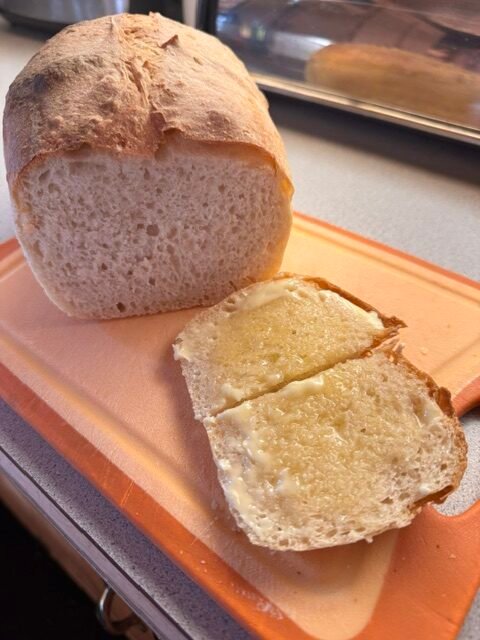
I have to admit, I’m a butter guy. Maybe it’s because I’m getting older and have decided some things just ought to taste good. Put a little real butter on a piece of warm sourdough bread (yep, I bake sourdough) and, as far as I’m concerned, margarine has a pretty tough act to follow.
But margarine has come a long way. Some of today’s spreads taste enough like butter that many people probably couldn’t tell the difference. That got me wondering.
If we use the same amount of each, which one is actually better for us?
Turns out, the answer isn’t quite as simple as we thought. A little history and insight here might be beneficial.
First, What Is Butter?
Butter is pretty simple. It is made primarily from cream that is churned until the butterfat separates from the liquid. Salt may be added, depending on the type of butter. That’s one of butter’s attractions. There isn’t much mystery about what’s in it. But butter contains quite a bit of saturated fat. Eating too much saturated fat can raise LDL cholesterol—the stuff commonly called “bad” cholesterol—and that can increase the risk of cardiovascular disease. So butter may be simple and delicious, but that doesn’t mean we should eat unlimited amounts of it.
So What Is Margarine?
Here’s where things get interesting.
Margarine was originally developed in France in the 1800s as an inexpensive substitute for butter. Modern margarine is generally made from vegetable oils that are processed so they remain spreadable. And margarine’s reputation has had quite a roller-coaster ride. For years, many margarines were made using partially hydrogenated oils, which contained artificial trans fats. Eventually we learned that those trans fats were particularly bad for our cardiovascular health. That gave margarine a pretty lousy reputation—and deservedly so. But today’s margarine isn’t necessarily the margarine many of us grew up with. Artificial trans fats from partially hydrogenated oils have essentially been removed from the U.S. food supply, and many modern soft margarines are made primarily from vegetable oils containing more unsaturated fats.
So Which One Is Healthier?
If we compare the same amount of butter with the same amount of a good modern soft margarine, margarine generally has the advantage when it comes to cardiovascular health. Why? Mostly because of the type of fat. Butter contains more saturated fat. A good soft margarine made primarily from vegetable oils generally contains more unsaturated fat and less saturated fat. Replacing some saturated fat in our diet with unsaturated fat can help lower LDL cholesterol and reduce cardiovascular risk.
But there is an important catch:
Not all margarine is the same.
A soft spread made primarily from canola, olive, soybean or similar vegetable oils can be quite different from a hard stick margarine. So if you’re buying margarine, turn the container around and look at the label. Look for one that is low in saturated fat, contains no partially hydrogenated oils and uses unsaturated vegetable oils as its primary fats.
Does That Make Butter Bad?
No. And this is where food discussions sometimes get silly.
One study says something is good for us. Another tells us it’s terrible. Pretty soon we’re afraid to put anything on our toast. Butter isn’t poison. It simply contains more saturated fat than many of the alternatives. If you enjoy butter, there is certainly room for some in an otherwise healthy diet.
How much we use is what really matters.
A small amount of butter because we really enjoy the flavor is quite different from slathering it on everything simply because butter is “natural.” Natural doesn’t automatically mean healthy. And processed doesn’t automatically mean unhealthy.
What About Cooking?
Now butter starts fighting back.
Butter is a wonderful cooking ingredient because it does something margarine doesn’t always duplicate very well:
It tastes like butter.
Those milk solids in butter help foods brown and develop that wonderful rich, slightly nutty flavor. Butter can be terrific for eggs, vegetables, sauces and many baked goods. But ordinary butter also has a weakness. Those same milk solids can burn at higher temperatures. If you need an application for higher heat, clarified butter or ghee can handle more heat because the milk solids have been removed.
Can We Cook With Margarine?
Certainly. Margarine can work well for sautéing and some baking. But once again:
Read the label.
Some soft spreads contain considerably more water than butter and weren’t really designed for baking. That can make a difference. If a cookie, pie crust or other recipe was developed using butter, replacing it with a soft spread may change the texture, browning and flavor. For baking, use a margarine specifically intended for baking if you’re substituting it for butter.
And There’s a Third Choice
We don’t necessarily have to choose between butter and margarine every time we cook.
For ordinary cooking and sautéing, oils such as olive oil and canola oil provide mostly unsaturated fats and are excellent choices. So perhaps the sensible answer isn’t:
Butter OR margarine.
Maybe it’s:
Use the right one for the job.
Use olive or canola oil for much of our everyday cooking. Use a good soft margarine if we like it and want to reduce some saturated fat. And if what we really want is the flavor of butter…use some butter.
Our Simply Sage Take
After looking into all of this, we’re not throwing the butter out of our refrigerator. If cardiovascular health is the only consideration and we’re comparing equal amounts, a good modern soft margarine generally has an advantage over butter because it contains less saturated fat and more unsaturated fat.
But that doesn’t make butter a bad food. It makes it a food we probably shouldn’t overdo. And frankly, if I’m going to put something on a warm piece of sourdough bread, I want to enjoy it.
So our approach is pretty simple:
Butter when the taste of butter matters.
Unsaturated vegetable oils for much of our everyday cooking.
Margarine if you enjoy it and want a spread with less saturated fat.
And whichever one you choose…
You probably don’t need half an inch of it on your toast.
Want to know more?
Mayo Clinic: Butter or Margarine?