

Walking — Maybe We’re Making It Too Complicated
by Cary and Patty ~ My Simply Sage
A My Simply Sage Look at Walking, Shoes and Staying on Our Feet
I like to walk early in the morning. It’s cool, the air is fresh and, believe it or not, there are quite a few other people out doing exactly the same thing. I’m not training for a marathon. I’m not trying to set any speed records. I just get out and walk. And at 78, I’m beginning to think that something as simple as walking may be one of the better things we can do to keep ourselves moving. And it’s not just for old fogies.
Let’s Start With Our Feet
Here’s something I’ve become very interested in lately: our shoes.
For years we’ve been told how wonderful all this cushioning is. Walking shoes and running shoes have become softer, thicker and more padded. But is more cushioning always better, particularly as we get older?
Apparently not.
The CDC’s information about safer footwear—for older adults, anyway—actually recommends a thin, firm midsole that allows you to feel the ground underneath your feet. For me, the key word here is THIN—or maybe just thinner.
Now this really got my attention.
Our feet provide information that helps our brain figure out where we are, what we’re standing on and what our body needs to do to stay balanced. As we get older, sensation, strength and balance can decline. Putting our feet on top of an extremely thick, soft platform may reduce some of the feedback we get from the ground. But this doesn’t mean everybody should run out and buy a pair of paper-thin shoes. And it certainly doesn’t mean that cushioning is bad for everybody. But think about it. Maybe less cushioning IS better!
So maybe we should be looking more for a shoe that fits properly, stays securely on our foot, has good traction and has a relatively thin, firm sole that lets us feel what’s underneath us.
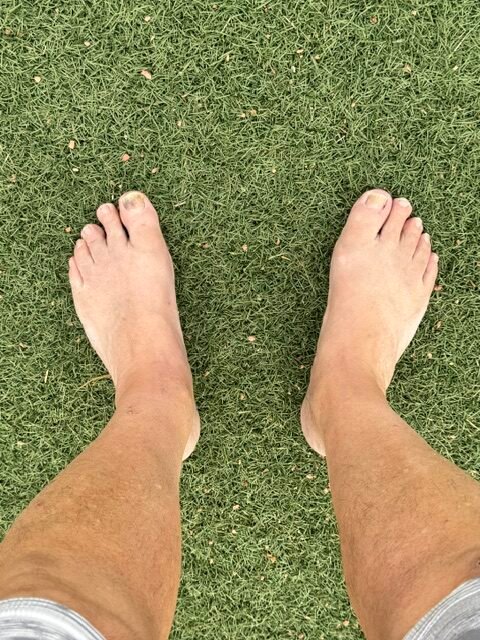
What About Bare Feet?
You know, I like walking around barefoot. I do it around the house quite a bit, and sometimes outside.
There’s actually something to the idea of letting our feet out of our shoes to feel the surface beneath them. And I dare anybody to tell me that taking those darn shoes off at the end of a hard day isn’t one of the best feelings in the world.
A lot of research has looked at whether increased sensory information from the bottoms of our feet can help with balance.
Well, I think so, and personally, it just feels good.
Carpet. Hardwood. Tile. Grass. Your feet have to react to those different surfaces.
But here’s where some common sense needs to enter the picture. Barefoot doesn’t automatically mean safer.
If your balance isn’t good, if you have reduced feeling in your feet, or if there are things around the house that you can trip over or step on, a properly fitted shoe with good traction may be the much safer choice.
And where I live, walking barefoot outside can get downright stupid in the summer. Sidewalks and pavement get hot. So I’m not suggesting everybody take their shoes off and start marching down the street. What I am suggesting is that our feet were designed to feel things. Maybe we shouldn’t completely insulate them from the world.
Then There’s Balance
This is where walking becomes about more than getting a little exercise.
Falls are a big deal as we get older.
More than one in four older adults reports falling each year. A fall can mean a broken bone, a head injury, reduced mobility and sometimes a loss of independence. That’s something worth paying attention to.
Walking helps keep the legs, ankles and feet working. But walking isn’t the entire answer. Strength and balance exercises are important too.
The point isn’t to become an athlete. The point is to keep doing the things that help us remain mobile.
How Much Walking?
I’m not particularly interested in turning my morning walk into a mathematical equation.
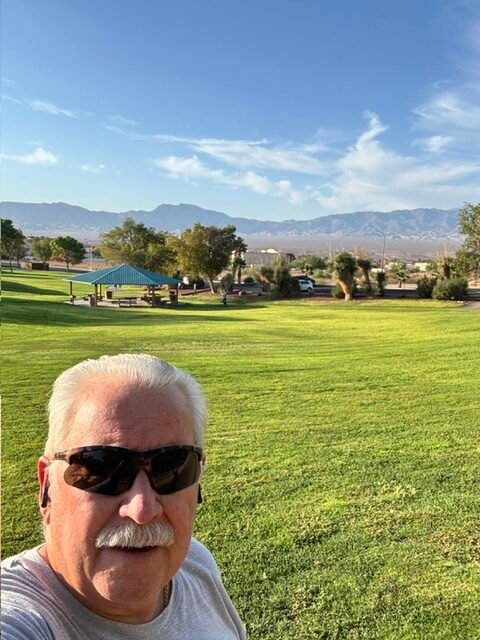
I usually walk for about 30 minutes. At my pace, I’m doing roughly two miles per hour, or about a mile in 30 minutes.
That’s not exactly Olympic speed. I don’t care. I have a couple of little hills along my route. There are inclines, declines and flat stretches. One or two of those hills are enough to get my heart working harder for a little while. Then the ground levels out, I keep walking, and everything settles back down.
That’s exercise. It doesn’t have to happen in a gym.
And of course, walking does a lot more than exercise your legs. It also works your core and the muscles that help support your back, improves endurance and circulation, and helps keep joints moving. Even your arms and shoulders get involved when you walk naturally. It really is a pretty good whole-body exercise for something so simple.
Don’t Get Hung Up on My Numbers
How fast I walk and what my heart rate does aren’t numbers somebody else needs to copy.
We’re all different.
Medications can affect heart rate. So can age, fitness and medical conditions. If you have heart problems, balance problems or haven’t exercised in quite a while, talk with your doctor about what level of activity makes sense for you. For me, the objective is much simpler.
Just Get Moving.
Get the legs working. Get the ankles working. Get the heart working a little harder. And then do it again another day.
There’s Another Benefit Nobody Talks About Much
You meet people.
You’d be surprised how many neighbors are outside early in the morning.
Say good morning. That’s it.
A simple “Good morning” to somebody you’ve never met before may eventually turn into a conversation. And a conversation might eventually turn into a friendship. Walking can be good for more than your legs.
My Simply Sage Walking Plan
I don’t think this needs to be complicated.
1. Get some sensible shoes.
Look for shoes that fit properly, stay securely on your feet, have good traction and don’t put you on top of a giant soft platform. A thinner, firmer sole may also let you feel the ground better.
2. Get out and walk.
Fast, slow, 15 minutes or 30 minutes—start somewhere that works for you.
3. Take some water.
Especially when it’s warm. And remember everybody, dehydration can sneak up on us more easily than you think. Been there, done that!
4. And by all means, pay attention to the ground.
Uneven sidewalks, loose gravel, curbs and poor lighting aren’t the places to prove how good your balance is.
5. And lastly, do it again.
It doesn’t have to be every day. I try to get out two or three times a week. That’s working pretty well for me. I’m still mobile. I’m 78. And I’m planning on being around for a long time.
So tomorrow morning, I’ll put on a pair of sensible shoes, grab some water and head outside.
Nothing fancy.
Just walk.
Sources & Further Reading
CDC — “Feet and Footwear for Older Adults.”
CDC Feet and Footwear Guide
Journal of the American Geriatrics Society — 2026 systematic review of footwear, gait and balance in older adults.
Read the PubMed summary
Systematic review — foot sensitivity, aging and balance.
Read the PubMed summary